In the rush of daily life, it's easy to lose touch with how we're actually feeling. We might notice we're "stressed" or "tired," but we rarely pause to identify the specific nuances of our emotional state. This is where mood and anxiety tracking becomes a game-changer for mental health.
The Power of Naming Your Emotions
Psychologists have long understood that simply labeling an emotion can reduce its intensity. This practice, known as "affect labeling," engages the prefrontal cortex and dampens the reactivity of the amygdala, the brain's alarm bell. By taking a moment each day to specifically identify whether you are feeling "Hopeless," "Down," "Okay," "Content," or "Joyful," you are actively regulating your emotional state.
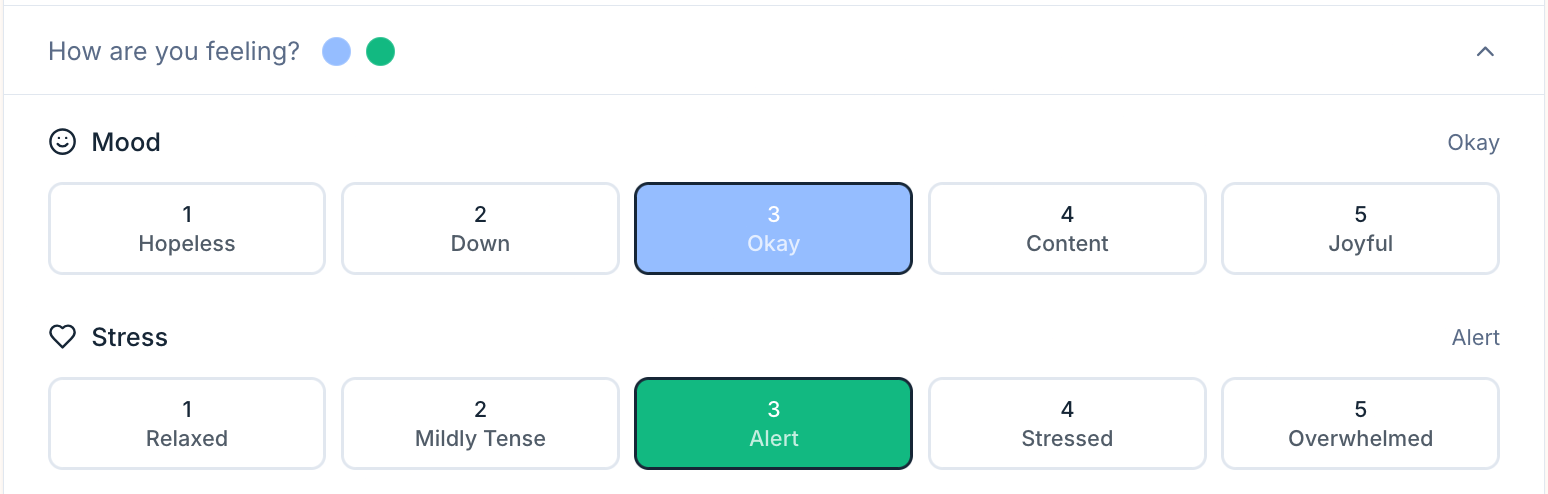
ThoughtTrail's simple daily check-in interface allows for quick yet meaningful emotional tracking.
Visualizing Your Emotional Data
Data isn't just for business; it's for self-discovery. When you track your mood and anxiety levels consistently over time, patterns begin to emerge that would otherwise remain invisible. Perhaps you notice a dip in mood every Sunday evening, or a spike in anxiety after specific types of interactions.
With visual tools like the Mood Trail, you can see these correlations instantly. It transforms abstract feelings into concrete data points, giving you an objective view of your subjective experience.
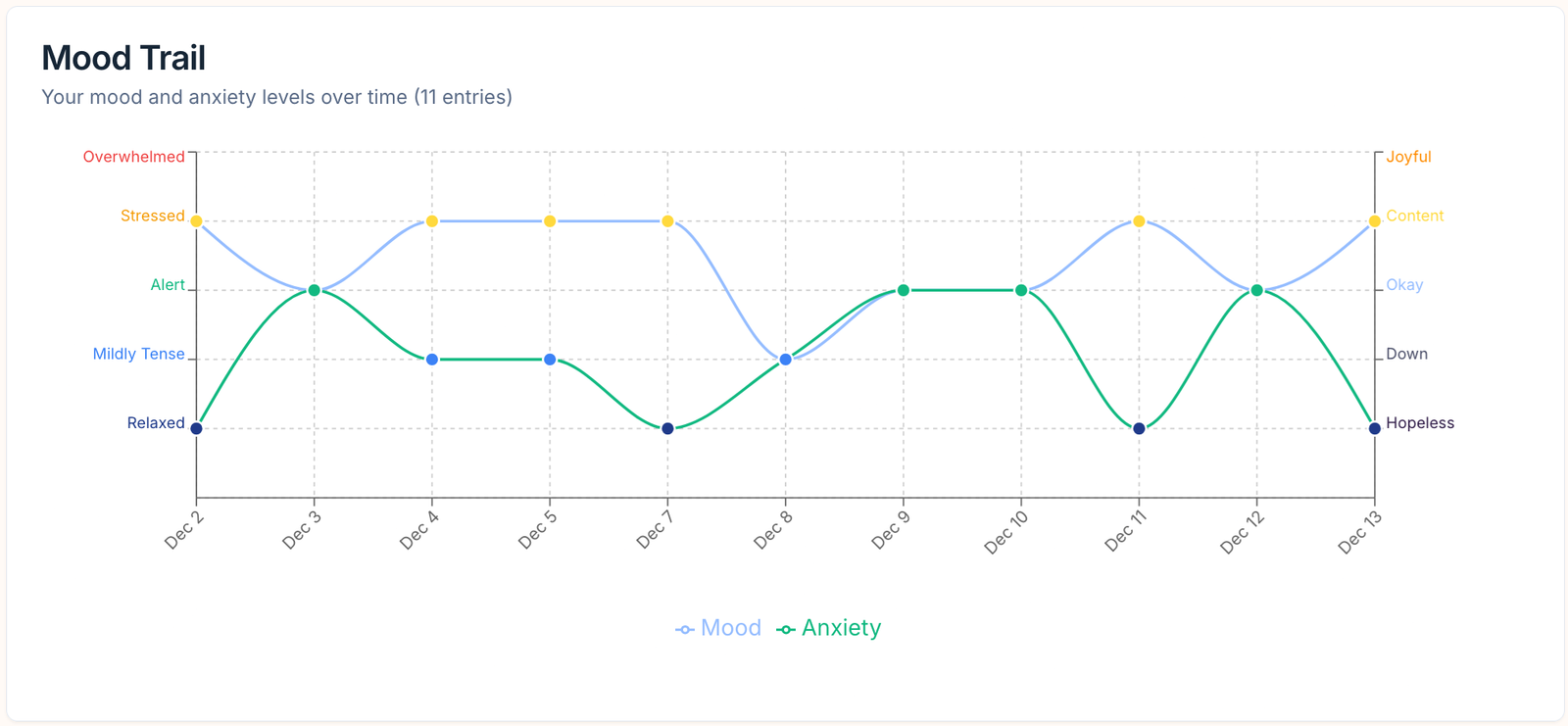
Visualize your progress and patterns with the Mood Trail chart.
Connecting the Dots
The real magic happens when you combine this tracking with your written journal entries. ThoughtTrail allows you to look back at days where your anxiety was high and read your journal entry from that day. This context helps you identify triggers—and just as importantly, glimmering moments of joy—that you can learn from.
Tracking isn't about judging your feelings; it's about witnessing them. It's a compassionate act of self-care that says, "My experience matters."
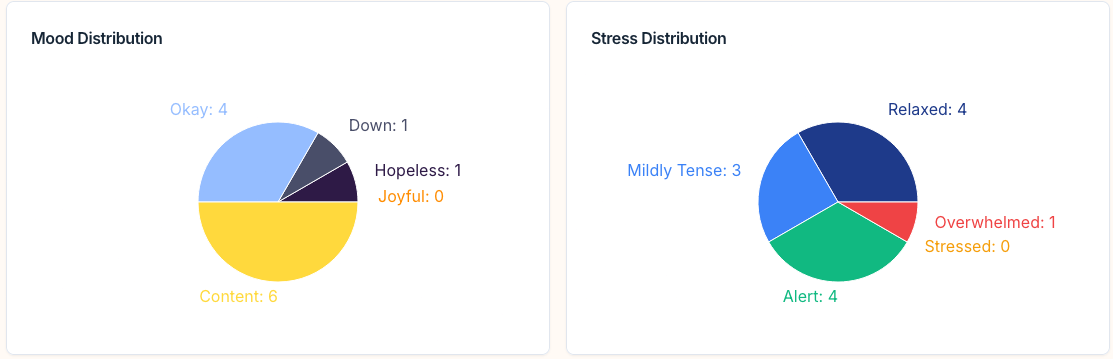
Understand your emotional landscape at a glance with Mood and Stress Distribution charts.
Start Your Tracking Journey Today
Join thousands of others who are gaining clarity and control over their emotional well-being with ThoughtTrail.
Register for Free